


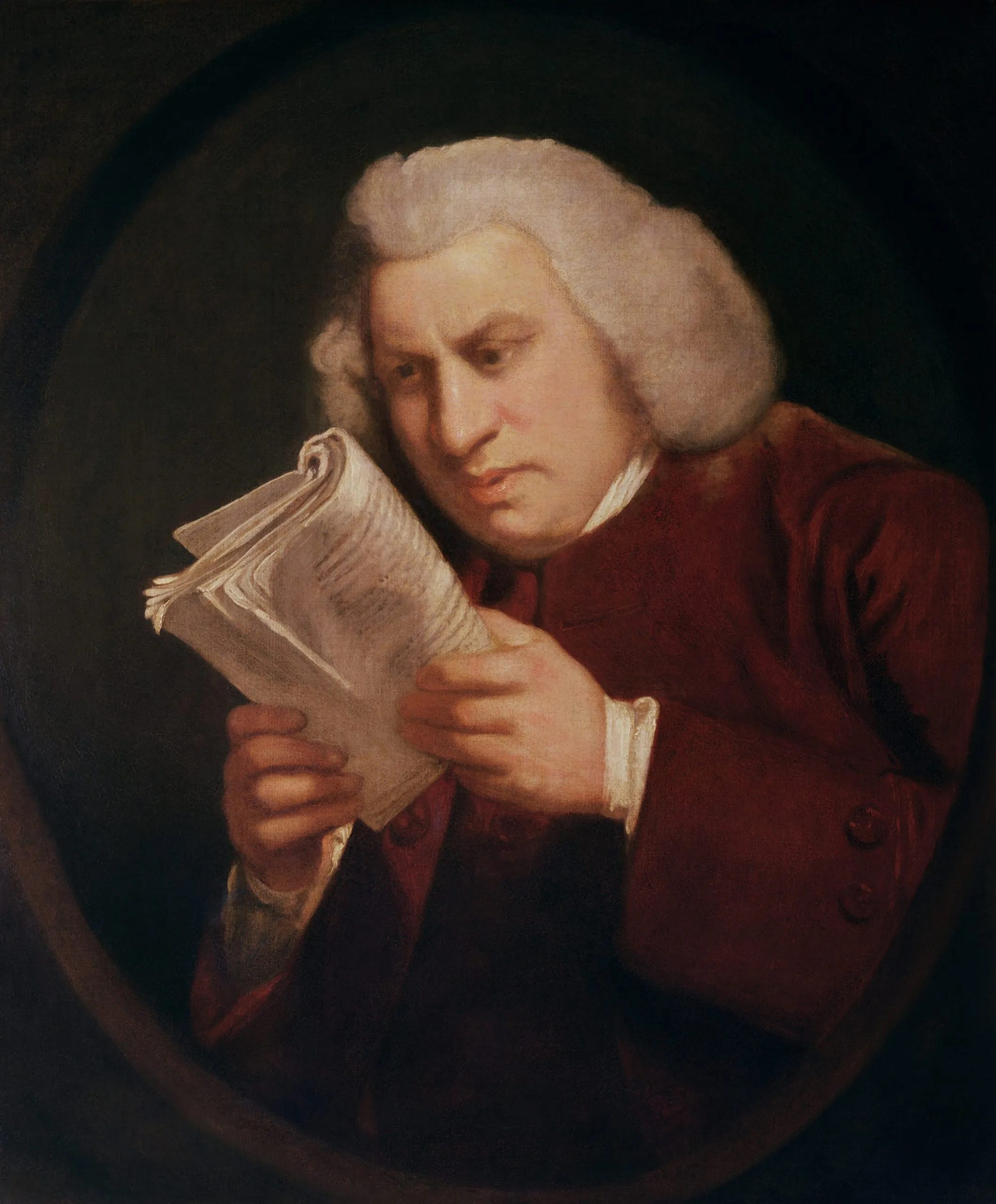
If someone were to ask you if you were well read, how would you respond? Certainly we all know people who have read more than we have, read better than we have, and grasped the ideas and concepts of their reading better than we have. Yet, the opposite is also true. We all know others who have not prioritized reading the way we have and are, therefore, not as well read. So, to some degree at least, there is a spectrum of being well read and we are all somewhere on it.
That also means that while each of us seems to know what we mean when we talk about being well read, others may have something different in mind because the term is, therefore, also to some degree nebulous.
That would lead us to an obvious second question. If someone were to ask you what it meant to you to be well read, how would you answer that question? What exactly does it mean to be well read, as you understand the term? I looked up the term in several dictionaries to try and find out if there was a standard understanding of this nebulous term.
Dictionary.com defines well read as “having read extensively (sometimes followed by in ). [Thus], well-read in oceanography.”
Collins English Dictionary’s entry defines it as an adjective that means “A well-read person has read a lot of books and has learned a lot from them.”
Cambridge Dictionary also says well read is an adjective meaning “Someone who is well read has learned a lot of information on different subjects by reading.”
The Oxford English Dictionary has three entries. The first treats the book itself as the object of being well read: “Of a book, etc.: attentively or (now chiefly) frequently read.” The second entry is two-fold: 2.a. In predicative use. Well-informed in a subject through reading. Also in extended use: highly experienced in something (obsolete). 2.b. Well-informed through reading; having read widely and attentively; learned, erudite.
These definitions demonstrate there is clearly an objectivity to the meaning of the term. It denotes a quality and quantity of reading and one’s reading habits that has produced a reader who is well-informed and knowledgeable, educated as it were. Yet, the term also connotes some cultural ambiguity. In other words, there is also a subjectivity to the term. One might be well read in a particular field of study or literary period and genre, for instance. It seems the modern academy’s emphasis on being highly specialized tends toward the subjective nature of the term since we encounter few well read generalists these days.
Writing for Book Riot, Susie Rodarme opines that since “Well-known” means widely-known… you could go with widely-read as a synonym.” But this doesn’t help get much further than we have already journeyed as it raises an additional related question. How many books and how broadly must one read—whether generally or in a specific field—to be widely read (i.e., well read)? Is having read three books on a subject enough to be considered well read or is it closer to ten or twenty books on the subject?
What about peripheral or ancillary reading? How much does one need to have read about the periods preceding and following Napoleon’s reign as Emperor of France to be well read on Napoleon? Is one well read on Napoleon if he has never read about military history generally or about the ideas that fostered the French Revolution? What about the history of France itself, or the nations Napoleon acquired during his conquest? Do we need to read European history to be well read on Napolean? I could go on but I think you get the idea.
Admittedly, using the term “well read” creates a bit of a sorites paradox, which is why I believe the adverb well modifying the adjectival participle read is what we’re really interested in when we say we want to be well read. Well simply means “well enough.” We want to be read, whether generally or specifically, well enough to... [fill in the blank].
Perhaps we want to have read well enough to speak intelligently or meaningfully about a topic, idea, person, or period. Or, we want to have read well enough to understand something we are curious about. Or, we want to have read well enough to teach a particular lesson or give a particular talk, or become an expert (whatever that is).
Even though this line of inquiry takes us out onto the skinny branches of the subject, it’s a noble goal to want to be well read, whatever that means for you in your particular circumstance and me and my particular circumstance. It is also an achievable goal as long as you accept the fact that you cannot read everything and there will likely always be someone better read in a subject than you—unless your goal is to become the best read. Then you might want to evaluate your mental health as you will unfortunately have to become a monomaniac.
But that’s a post for another day. Here I want to issue an adjacent caution. There is a kind of prioritizing reading for merely having read. This is not what we’re after when we say we want to be well read. So far, we’ve really only been discussing quantity implied in the term well read. But equally important is the quality of our reading.Since we cannot read everything—even if we could it wouldn’t all be worth the effort—we need to read selectively.
So how to we choose the books that will help us become well read? Following are some tips I trust will help you become well read, whatever that specifically means for you. After I share these tips, I want assert what I believe is the most important reason—one we have not discussed yet and one I think helps us get the closest to the definition—for being well read. To give you a little hint, I believe it’s incumbent upon all of us to become well read. I’ll tell you why after I share the following tips.
First, define your goals for what it means to be well read for you. Do you want to be well read on a specific topic? Do you want to be well read generally? Do you want to be well read in the classics? Write your goal down somewhere, in a commonplace book perhaps, and explain to yourself what it would mean for you to be well read. This will cover the subjective or connotative aspect of the term.
Next, find the best general works on the topic. That might mean one or a few books or articles, but start with something generic and accessible to get the sweep and scope of your subject. Record in your commonplace book any notable references from the text itself and from the bibliography. This is where you begin building your reading list.
Third, investigate to discover the most influential and best scholarly resources on the topic—not necessarily the most popular. In my opinion you’ll want to read those later. If you have access to an academic or public library, there are resources there to help you track down the best of the best. If you’re like most of us and use Google or some other search engine, that could also be a good place to start. If the latter is your go-to, then let me recommend narrowing the parameters of your search by using Google Scholar or Jstor.org as a starting point. I also provide a guide and links to a large number of open access sites in The Reading Room.
If there are primary sources accessible (the author’s own writings, public documents, etc.) read those first. Continue to take notes as you read, collecting both quotations and insights, as well as expanding your investigation in both primary and secondary sources (scholarly writing on the primary subject and sources). Who and/or what work did your primary subject reference? Who and what sources are your secondary sources referencing. Are there ancillary subjects you need to read about to understand the context and culture of your subject? This is where the scope of your reading begins to widen.
For example, if you were wanting to be well read in Milton, you would, of course, want to spend a lot of time reading his most influential works: Paradise Lost, Paradise Regained, Samson Agonistes, Aeropagitica, Of Education, and some of his early hymns, like “On The Morning of Christ’s Nativity.” You would want to read them carefully, frequently, and memorably. You would then read other scholars’s and poets’s criticism on Milton’s works. This would likely lead to your reading, among other things, more about Milton’s life and the people he associated with, the political climate in England, the Renaissance, and the Hartlib circle, etc. But you would discover these ancillary subjects as you were reading Milton’s works and biographies.
Becoming well read in these areas would not only ensure you were well read in Milton, but would also ensure that you discovered further avenues of potential interest—like the English Civil War and the execution of King Charles I, Oliver Cromwell, Andrew Marvell’s poetry and Metaphysical poets, Francis Bacon, John Amos Comenius, the founding of the Royal Society in London, and the Romantic poets like William Blake and Percy Bysshe Shelley.
If this sounds a lot like research, you’re right. But it also sounds a lot like Alan Jacob’s concept of Reading at Whim, that is reading well and letting your interests lead you to new discoveries also worth reading well.
At the end of the day, to be well read means having read a lot of the best books on any given subject. But it also means having accomplished the act of reading to the best of your ability. This leads us to another point of disagreement among readers. Can a person be considered well read having read 200 books in a year, for instance? Sure, they read a lot of books, argue the critics, but did they really read them? What about audio books? Can a person listen to audio books and be considered well read? Of course, one might understand how these approaches would seem dubious to some, but this is where we must keep in mind each readers’ personal goals and aptitude. One thing I’ve learned over the years is all readers are not created equal.
Here’s a summary of my tips, plus a bonus
Decide what your own goals are for becoming well read. It’s different for everyone. Don’t let others’ opinions and criticisms influence how you read or how much you read. Steady wins the race, as they say. That doesn’t mean reading little or reading low-brow twaddle counts as being well read. I read a lot of Mad Magazine growing up—and I read them repeatedly—but I wouldn’t consider myself well read for having read them.
Read actively and grow your reading habits incrementally. We all have to start somewhere. Maybe this is the year you decide to become well read. It’s okay if you haven’t read much before. I offer a free Book Shelf to readers of BOOKS AND LETTERS that will serve as an introduction to help you get started on your journey to becoming well read.
Read at Whim. Let your interests guide you to the next place in your reading. I recommend venturing out of your comfort zone and known interest zone from time to time—I’ve made some serendipitous discoveries this way—but reading expansively around a central interest naturally leads a reader into other territory while connecting dots that helps one be well read both quantitatively and qualitatively.
Avoid study guides that encourage passive reading and create a false sense of confidence about your understanding of the work or idea. These are all too common in our day. Mortimer Adler advised against adding preliminary readings to his Great Books project, save for a short biographical sketch of the author, because all literary commentary is biased and they strip students of their profound need to learn to think deeply. Reaching above yourself and wrestling with the symbols (words and their meanings), said Adler, are what build lasting memory and exercise the skills a person needs to become autodidactic.
As promised, the reason I believe it is incumbent upon all of us to become well read is two fold. First, we are human beings. As Robert Hutchins famously noted, “Nobody can decide for himself whether he is going to be a human being. The only question open to him is whether he will be an ignorant undeveloped one or one who has sought to reach the highest point he is capable of attaining.”1
Second, we are citizens of some place and successful self-governance requires one be educated, well read in his cultural heritage. As James Madison (and many others) duly warned: “A popular Government, without popular information, or the means of acquiring it, is but a prologue to a Farce or a Tragedy; or perhaps both. Knowlege will for ever govern ignorance: and a people who mean to be their own Governours, must arm themselves with the power which knowledge gives.”2
Finally, we need to become well read that we might become virtuous human beings who are citizens of a nation who are also eternal beings who are created in the image of God. I am not saying that becoming well read is salvific by any stretch, but I am saying it is a means (one of many) of grace: Lectio transit in mores (what we read passes into who we become).
Robert Maynard Hutchins, The Great Conversation: The Substance of a Liberal Education.
James Madison to William T. Barry, 4 August 1822. https://founders.archives.gov/documents/Madison/04-02-02-0480