

Fiends, Freaks, and Fantasy
A Summary Conclusion of the GROTESQUE IN THE CHRISTIAN HUMANIST LITERATURE OF C. S. LEWIS, FLANNERY O’CONNOR, AND J. R. R. TOLKIEN

In preparation for a short talk I’ll be giving this week at the Ciceronian Society’s annual conference, I was reviewing some of my relevant dissertation research, and decided to share the conclusion here on Substack. I was pleasantly surprised at how much of it is still relevant to my current research interests.
If all the world were Christian, it might not matter if all the world were uneducated. But, as it is, a cultural life will exist outside the Church whether it exists inside or not. To be ignorant and simple now—not to be able to meet the enemies on their own ground—would be to throw down our weapons, and to betray our uneducated brethren who have, under God, no defense but us against the intellectual attacks of the heathen. Good philosophy must exist, if for no other reason, because bad philosophy needs to be answered.
—C. S. Lewis, The Weight of Glory
In this dissertation, I have argued that Lewis’s fiends, O’Connor’s freaks, and Tolkien’s fantastical monsters have more transcendent significance than merely entertaining their audiences with horror or disturbing images. My assertion is that these three Christian humanists made critical purchase on an answer to the preeminent question, “What is man?,” as it reemerged during a period of crisis in the mid-twentieth-century.
Although the question, “What is man?” is expressly perennial, there was something unique and unsettling about its special appearance at a time when novel nineteenth-century reductionist ideas of man (i.e., Marx, Darwin, Nietzsche, and Freud) were beginning to blossom, only to reveal its ugly fruit: two World Wars and despots erasing “man” en masse with gun barrels and gas chambers.
My dramatis personae successfully confronted the decadent West by offering it a mirror of its true soul using grotesque images and characters in their imaginative literature. Their unique use of the grotesque is significant because it not only makes the case for recovering Christian humanism in the twenty-first century, but it also provides a model for doing so.
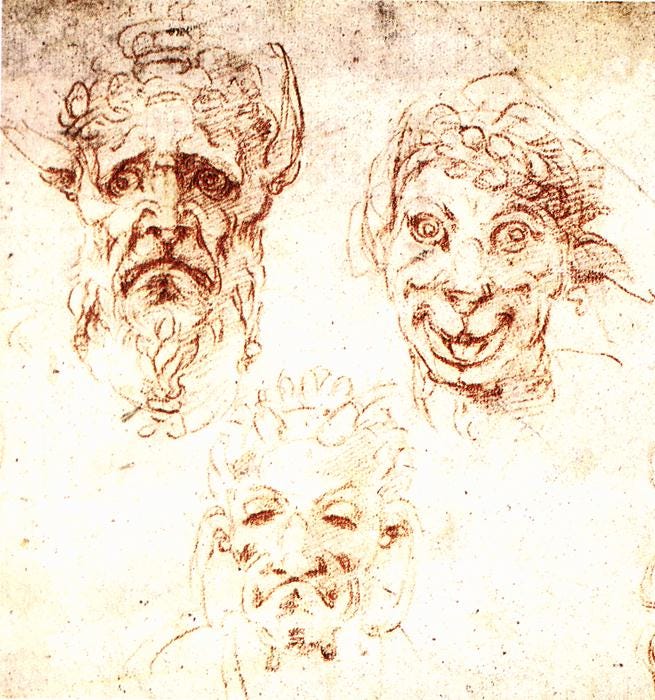
Historical Consciousness
Before establishing my claim, it will be helpful to first note the manner in which I have approached this project and then briefly recollect the chapters by way of summary. In the first place, I approached the project in the manner of historical evaluation rather than turgid analysis. That is, I have taken up Lukacs’ and Shaw’s claim that “the history of everything amounts to the thing itself,” and have attempted to investigate the circumstances of the ideas treated in this dissertation—i.e., the historical crisis of man, Christian humanism, the grotesque, and the lives and works of the dramatis personae—by evaluating the roots from which they have sprung as well as their development and fruit.
Because I believe the ideas and writers treated here are best understood in terms of historical consciousness, I have presented my research, evaluation, and arguments within a framework of four parts, each part consisting of two chapters that correlate between a big idea and a Christian humanist who emulates that big idea.
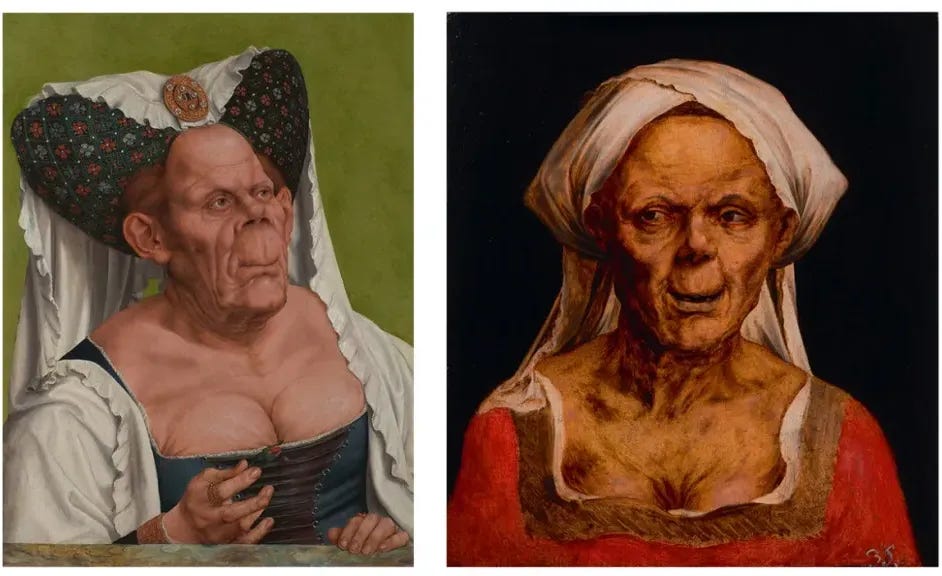
Part One: Chapters One and Two
Part one evaluated the crisis during the mid-twentieth century, the question: What is Man?, as well as the Christian humanist response to that question as representatively answered by C. S. Lewis in his acclaimed work, The Abolition of Man.
More specifically, in chapter one, I evaluated the West’s early-to-mid-twentieth century “crisis of man” following Mark Greif’s research and analysis of the period, although I came to different conclusions than he did. Grief rejected the notion that there was a final answer to the question and concluded the real value of the crisis was the maieutic effect which eventually gave rise to the Civil Rights movement during the middle-to-late twentieth century.
While there is merit to his claim that the maieutics surrounding the crisis question afforded new aspirations toward a more just and humane society, those aspirations fell desperately short because modern notions of humane reasoning are far too subjective and relativistic to offer any meaningful substance as Lewis demonstrates in his treatment of the Tao.
Chapter two, then, evaluated the life of C. S. Lewis as a Christian humanist, giving brief attention to the influences which shaped his life, and then concluded with an analysis of his philosophical work, Abolition of Man, which treated the crisis question from the perspective of a Christian humanist.
Part Two: Chapters Three and Four
In part two, I traced the historical development of Christian humanism proper, and established a relevant operational definition of the perspective as it relates to my dramatis personae. In this part, I introduced and developed J. R. R. Tolkien as the representative Christian humanist and evaluated his attempt to re-mythologize the West. Specifically, in chapter three, I evaluated the historical development of Christian humanism by beginning with its inchoate expressions in Idealism and Christian orthodoxy and traced it through the Scholastic period, the Renaissance and Reformation periods, and then concluded with its presence and influence in the mid-twentieth century.
Ultimately, I argued that Christian humanism offers a viable socio-theological vision of man that is worthy of consideration in modern intellectual pursuits because it does not reduce man to mere material or bestial existence, nor does it attempt to elevate man to some feigned divinity as “the measure of all things.” Rather, Christian humanism considers man in the fullness of his uniquely unified corporeal and metaphysical realities as established by the Incarnation.
Then, in chapter four, I followed up by fleshing out the salient influences on the life and work of J. R. R. Tolkien, and demonstrated how his Legendarium, particularly his myth of Earendal, is a genuine model of Christian humanism in the modern age because it seeks to re-mythologize the West and give man a vision for culture that marries faith and right reason.
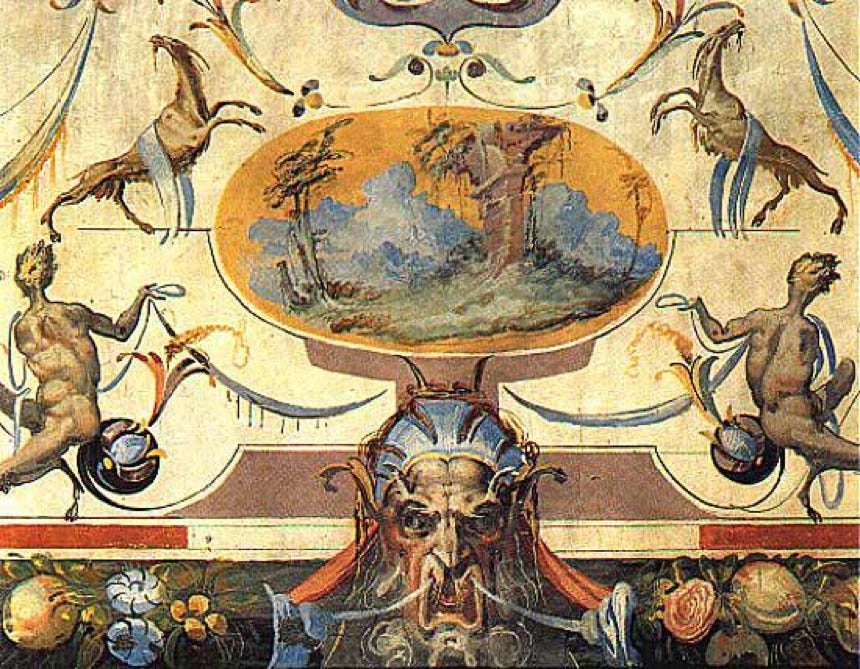
Part Three: Chapters Five and Six
Next, in part three, I evaluated the idea of the grotesque in art and literature, and provided an in-depth historical analysis of the birth and development of the artistic and literary feature, before looking at the way in which Christian humanists, of whom Flannery O’Connor is here representative, think about and use it to engage their decadent and divided culture.
More precisely, in chapter five, I investigated the history, the various definitions, and sundry attributes of the grotesque as primarily established in the scholarship of Wolfgang Kayser, Mikhail Bakhtin, and Geoffrey Galt Harpham, three leading scholars on the subject.
Then, in chapter six, I moved to evaluate the influences on the life and works of Flannery O’Connor as a Christian humanist, exploring her sacramental view of reality, her anagogical vision for literature, and the distinct ways in which she employed the grotesque to speak to a modern “blind” and “deaf” audience.
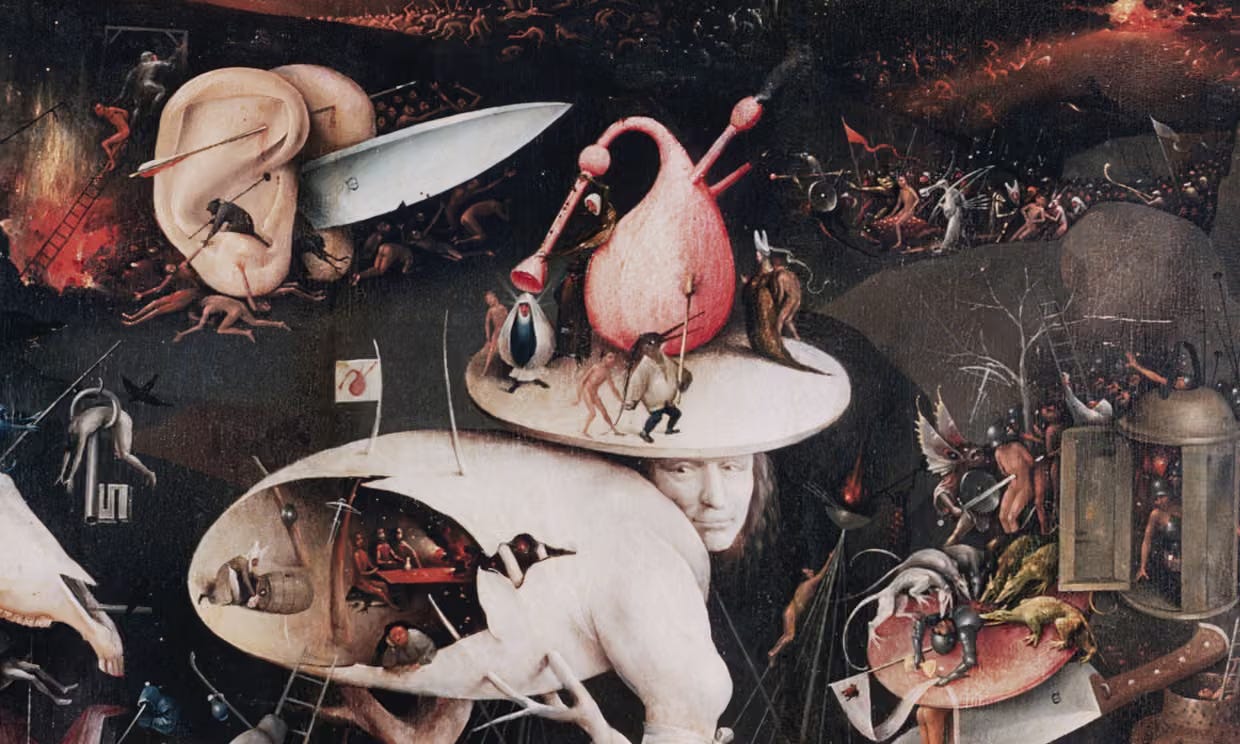
Part Four: Chapters Seven and Eight
Finally, in part four I discussed the more specific ways in which all three of the dramatis personae share a socio-theological view of man and an anagogical vision for literature that is rooted in and derived from Thomistic and classical Christian humanist categories of thought. Peculiar to chapter seven was a discussion of the particular theological and artistic influences of St. Thomas Aquinas and Jacques Maritain that informed Tolkien and O’Connor’s vision for literature and culture.
Alongside them, I evaluated the interesting way in which the classical Pagan authors who influenced Aquinas also influenced and informed Lewis’s distinct vision despite his antipathy for Neo-Scholasticism. Ultimately, I demonstrated that Christian humanism was both broad and deep enough to provide these three authors with a common vision for humanity and art, especially their use of the grotesque.
Finally, in chapter eight, I analyzed and evaluated the unique manifestations of the grotesque in the works of my dramatis personae. I looked at Hazel Motes in O’Connor’s first novel, Wise Blood, along with the Un-Man in Lewis’s Perelandra, and also Gollum and Shelob in Tolkien’s The Lord of the Rings, to clearly demonstrate the ideas I had previously been developing throughout this dissertation (i.e., the manner in which Christian humanists can use grotesque art in imaginative literature to provide relevant and meaningful commentary on the decadence of their immediate culture).
Concluding Thoughts
Admittedly, the literary mirror of grotesqueness which my dramatis personae held up to the West was perhaps unduly dismissed in their own day, both by the public and by the academy, but it does not discount the value of their vision and method. Proof is the fact that their works have remained relevant, even popular at times, and continue to rouse conversations within and without Christian intellectual communities because with the grotesque, there is a real sense in which readers’ attention is still being arrested while leaving their understanding unsatisfied—and that experience continues to solicit contemplation and response.
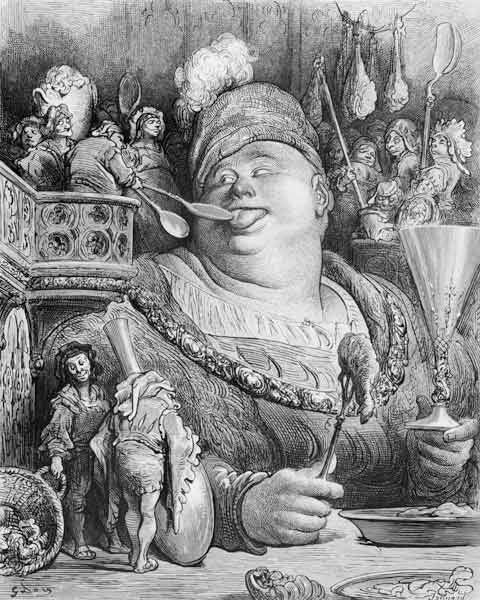
The Christian humanists considered in this project engaged culture in an artistic manner unique to their period of history to show the manner and degree in which the West had declined. Using what could be thought of as an inverse of Plato’s isometric metaphor of the city being the soul writ large, these writers employed the morally authoritative power of the novel to reveal the decadence within the soul of the modern individual, and did thereby “write large” a way to observe decadence in the West. To be sure, although a standard from which the West has declined may arguably be unmeasurable, their insightful use of imaginative literature demonstrates it is clearly observable.
Moreover, their vision and approach to literature provides our generation with a meaningful model for contributing to our own culture by accurately speaking to the issues of our own day. Said another way, these Christian humanists show us what it meant to be a humanist in the twentieth century, and thereby teach us in the twenty-first century how to “‘rally the really human things’ in the service of the gospel.” Their crisis question was “What is Man?,” and the twentieth-century Christian humanists gave the West a conception of a whole man, a theological man, by means of grotesque characters (both ludicrous and terrifying) in imaginative literature.
The crisis question of the twenty-first century, I argue, is “Who am I?” This prevailing postmodern philosophy asserts that the only objective truth is reality cannot be known; therefore, all truth is relative (i.e., socially constructed) and any attempt to objectify it is nothing more than an attempt to seize power. Subsequently, identity and self are among the most imperative and polarizing contemporary issues of our postmodern times. In the prevailing worldview, clarifying, establishing, and signaling to which racial, ethnic, sexual, or religious group one belongs is paramount to achieving a proper understanding and acceptance of one’s self.
Drawing from the works of cultural philosophers, Phillip Reif, Robert Bellah, and Charles Taylor, Carl Trueman has asserted that in our postmodern times, the popular culture’s answer to that question is only and emphatically attained by way of expressive individualism, which sounds relatively close to the autonomous man being sought in the twentieth century. Trueman writes, “Expressive individualism holds that each person has a unique core of feeling and intuition that should unfold or be expressed if individuality is to be realized.” Said another way, “the modern self is one where authenticity is achieved by acting outwardly in accordance with one’s inward feelings.” The question for us then, is what does it look like for Christian humanists in the twenty-first century to engage our crisis question?
Since rational public discourse is only possible when all parties participate and the Postmodern tactic is the will to power (e.g., shouting down or “canceling” an opponent) one suggestion is a return to texts. Recall that during this crisis period of mid-twentieth-century dehumanization, the West turned again to humanism to try and recover its humanity, and since humanism always depends on texts for its vitality, the novel emerged as a universally accepted authority in culture.
In short, this was because the novel stood in for the formerly accepted religious cultural authority. Driven by the modern intellectual contest between American and European literary cultures, the new authoritative medium allowed for high philosophical obligations to intersect ordinary life, providing a way for authors to “sermonize, prophesize, and preach,” and for the public to contemplate and consider ultimate things apart from the Church or the academy.
In some sense, the novel became for the mid-twentieth century culture what Matthew Arnold suspected poetry would become for nineteenth century culture as it began to cast off religion. As if on cue, our dramatis personae were poised and ready to take their place on stage in the last great era in which Greif asserts theologians would be taken seriously as intellectuals by intellectuals by engaging culture through grotesque characters in imaginative literature.
If Gene Veith is correct, that “Christians, being ‘people of the Book,’ can never abandon reading and writing…[and] may be in a unique position to be cultural producers themselves,” then the Postmodern era, in which most of the literary gatekeepers have fallen and publishing has been democratized, may afford Christian humanists the opportunity to once again create literature for this epoch that will allow them to be taken seriously as intellectuals by intellectuals.
The question is, which genre of literature is authoritative now?
I would argue that Ted Dekker aptly uses the grotesque with his portrayal of “The Horde” in his Circle Trilogy. One of my favorites!